



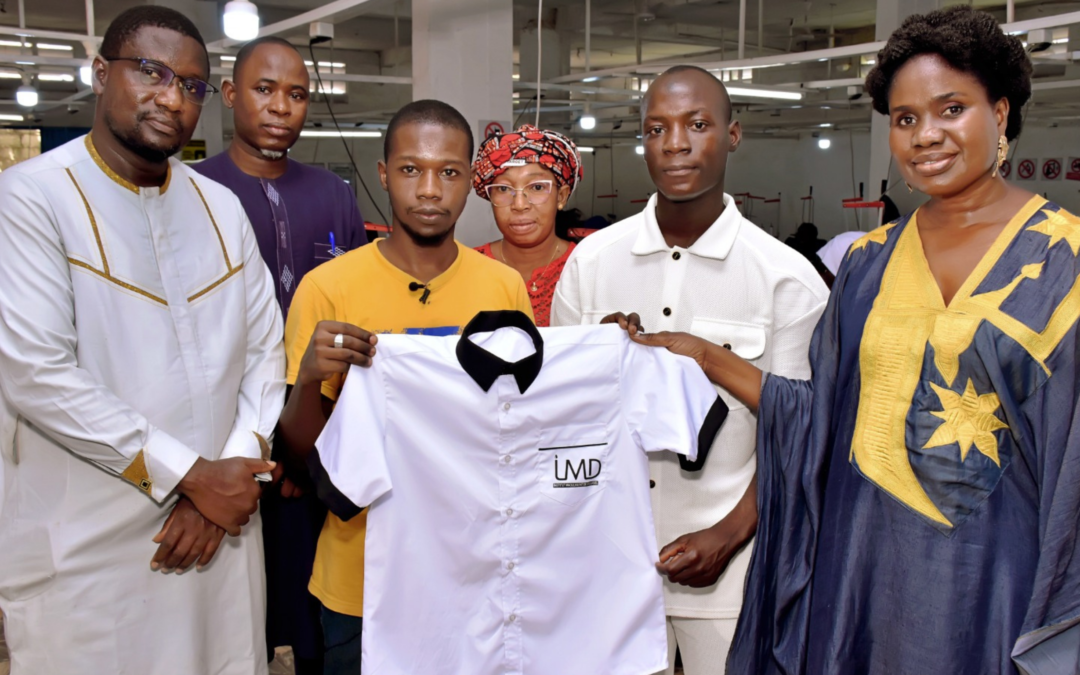
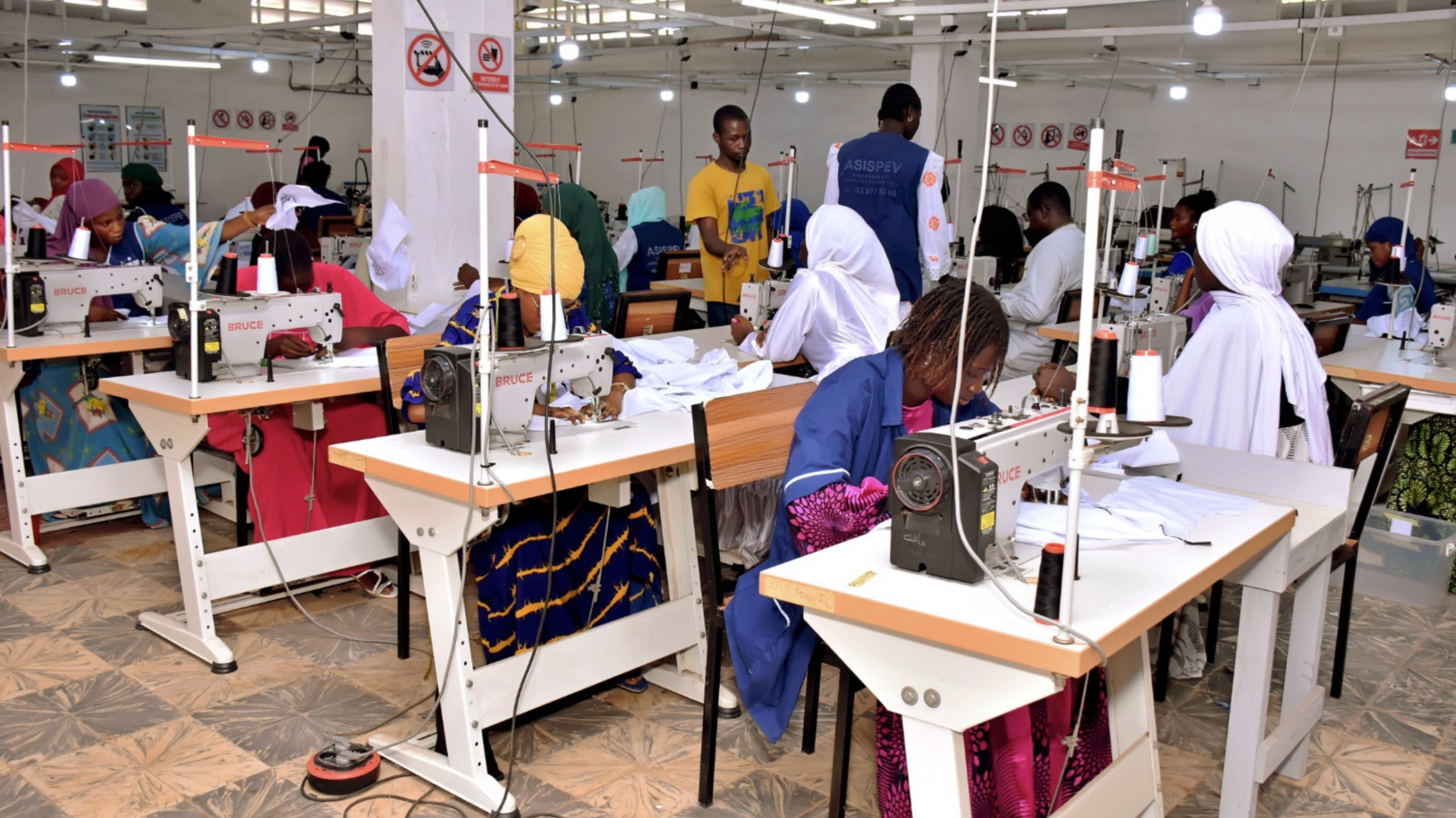
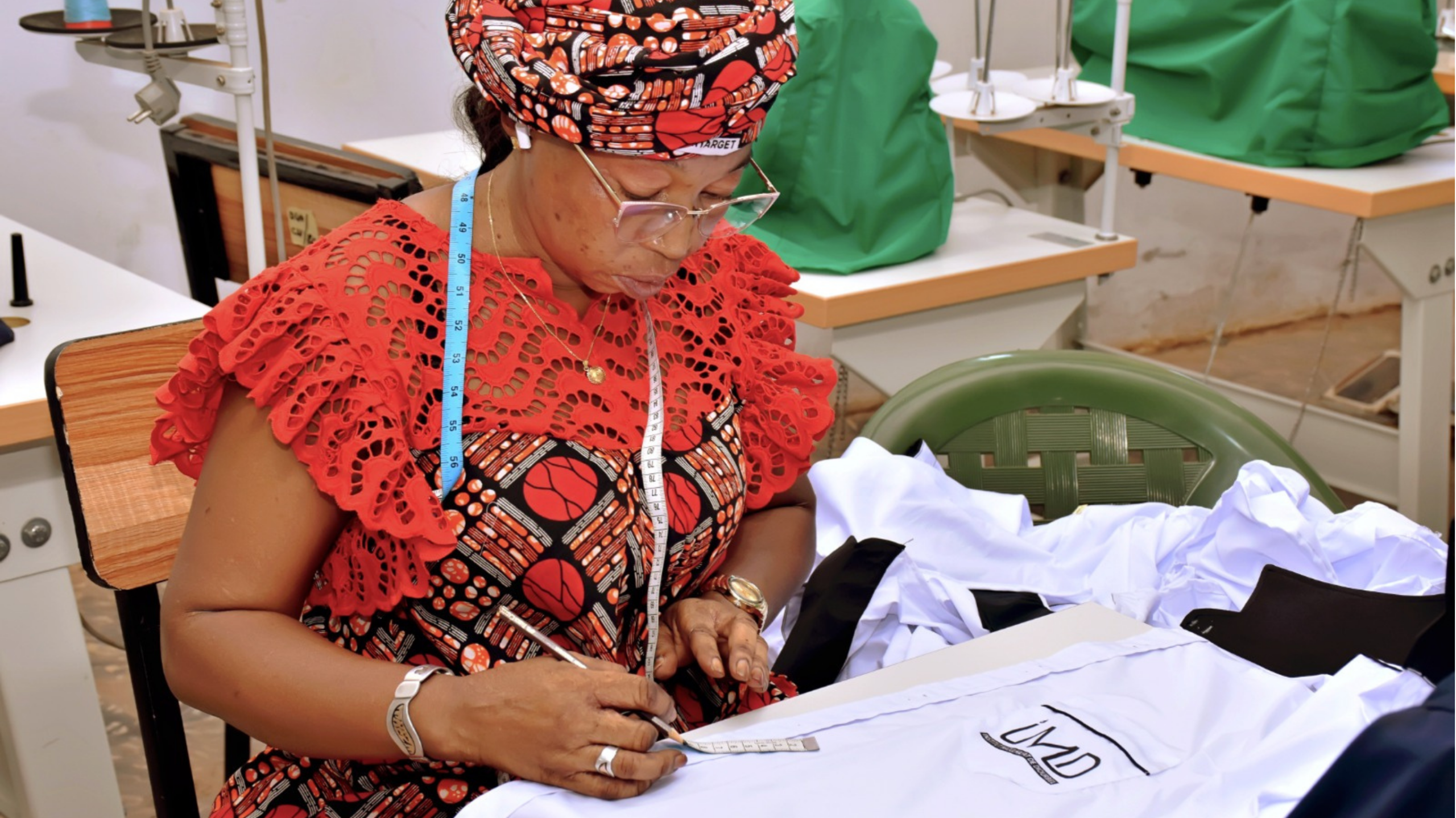
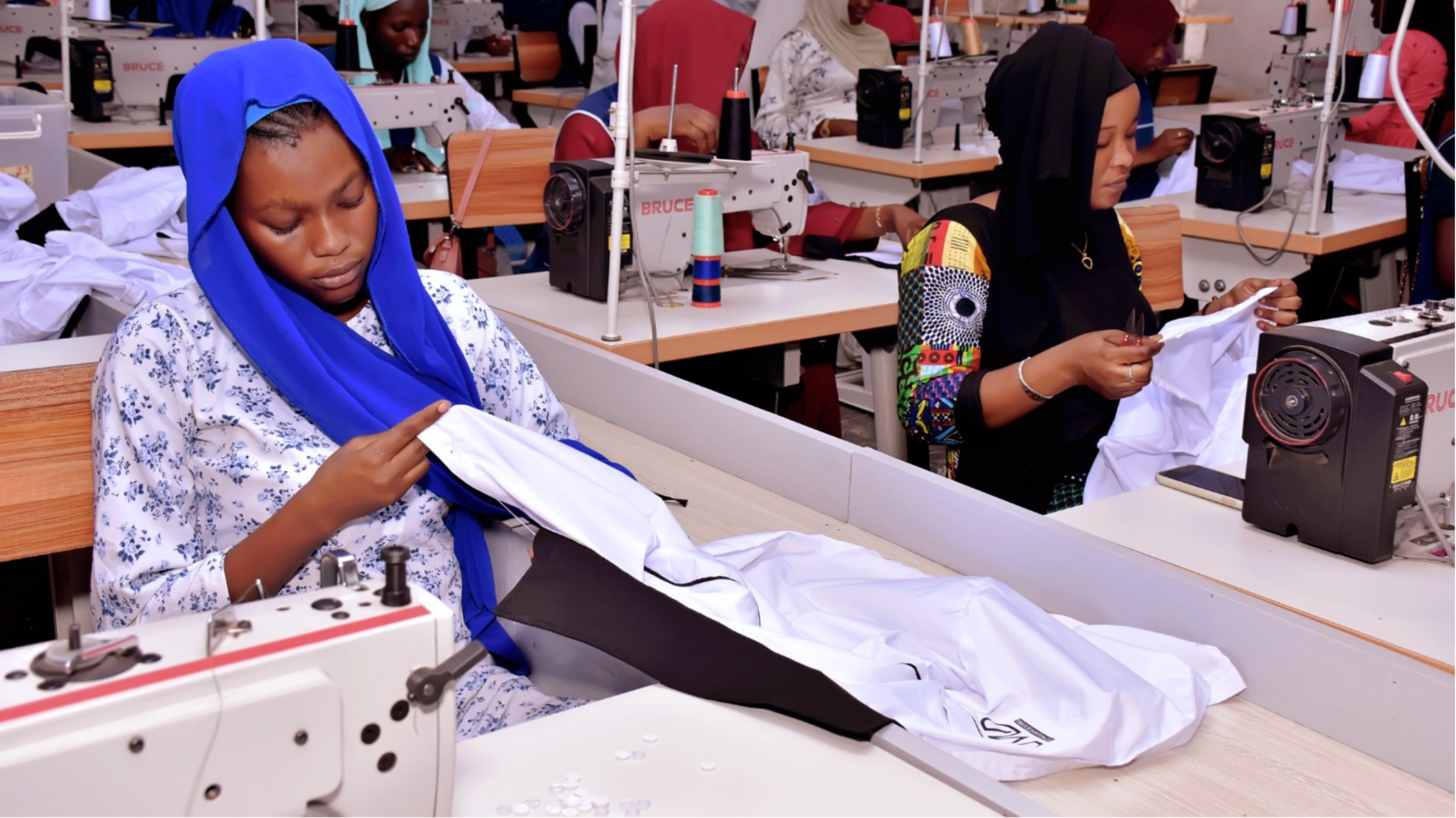
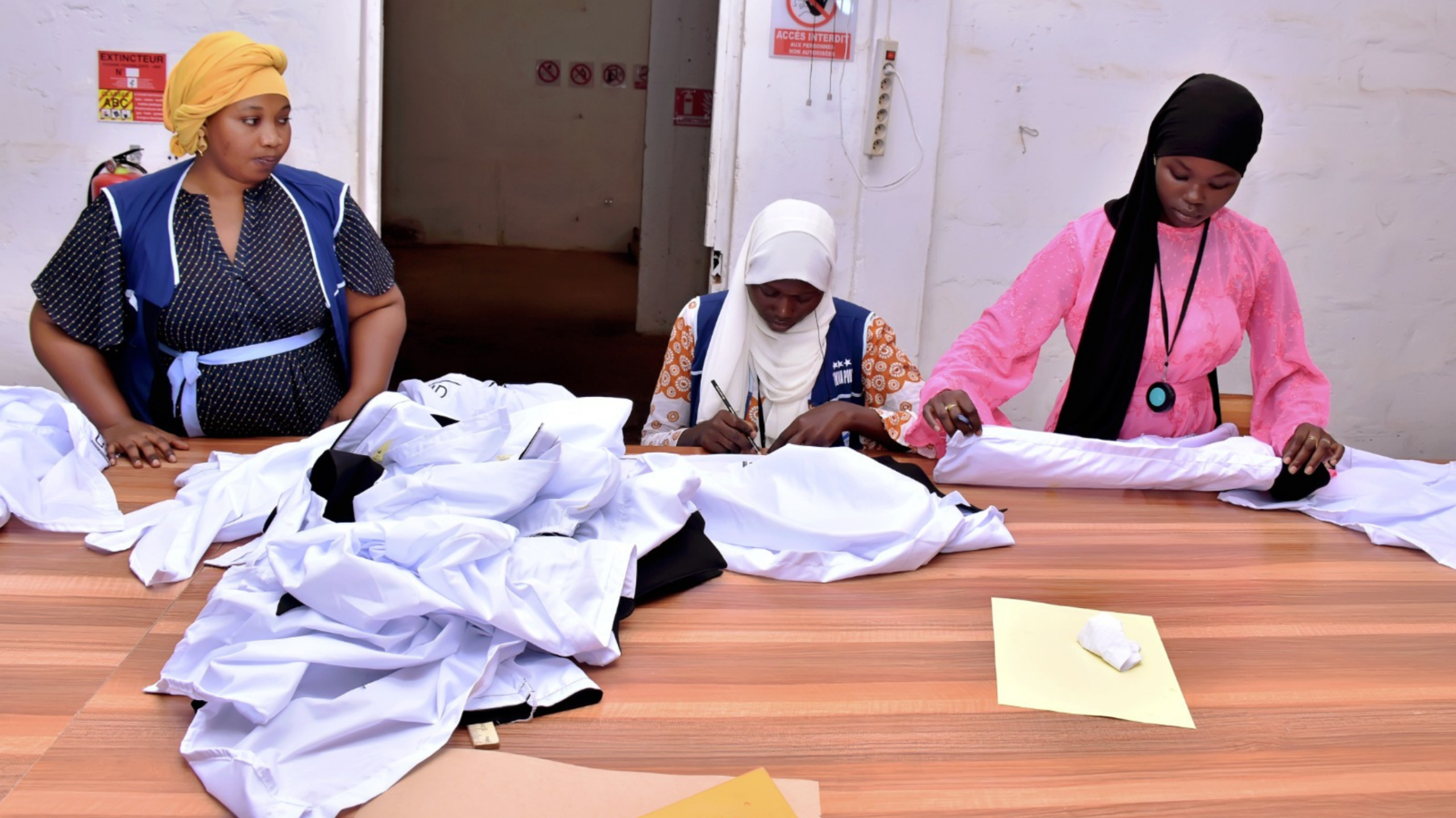
A decisive milestone was reached in the summer months: in Senegal, the transition from the pure training phase to independent, practical production began. With the visit of Asnake Worku Erge, an experienced expert in textile production from Ethiopia, we were able to accompany and reflect on this first production phase. Our tailors sewed almost 2,300 school uniforms during this time. It has shown us that what we have learned works, that processes are effective and that real added value is created from training.
At the same time, the further development of the kindergarten was particularly moving: starting with just four children in 2024, the number had doubled to eight by the end of 2025. For many young mothers, this care is a crucial prerequisite for career development. In the meantime, our nursery school teacher is also pregnant. She will be able to bring her own child with her in future – a nice sign of how much our approach is reflected in everyday life.
We introduced literacy courses to complement the technical training, and many of our trainees previously only spoke Wolof. Today they speak, read and write in French. This opens up new perspectives, especially in everyday working life.
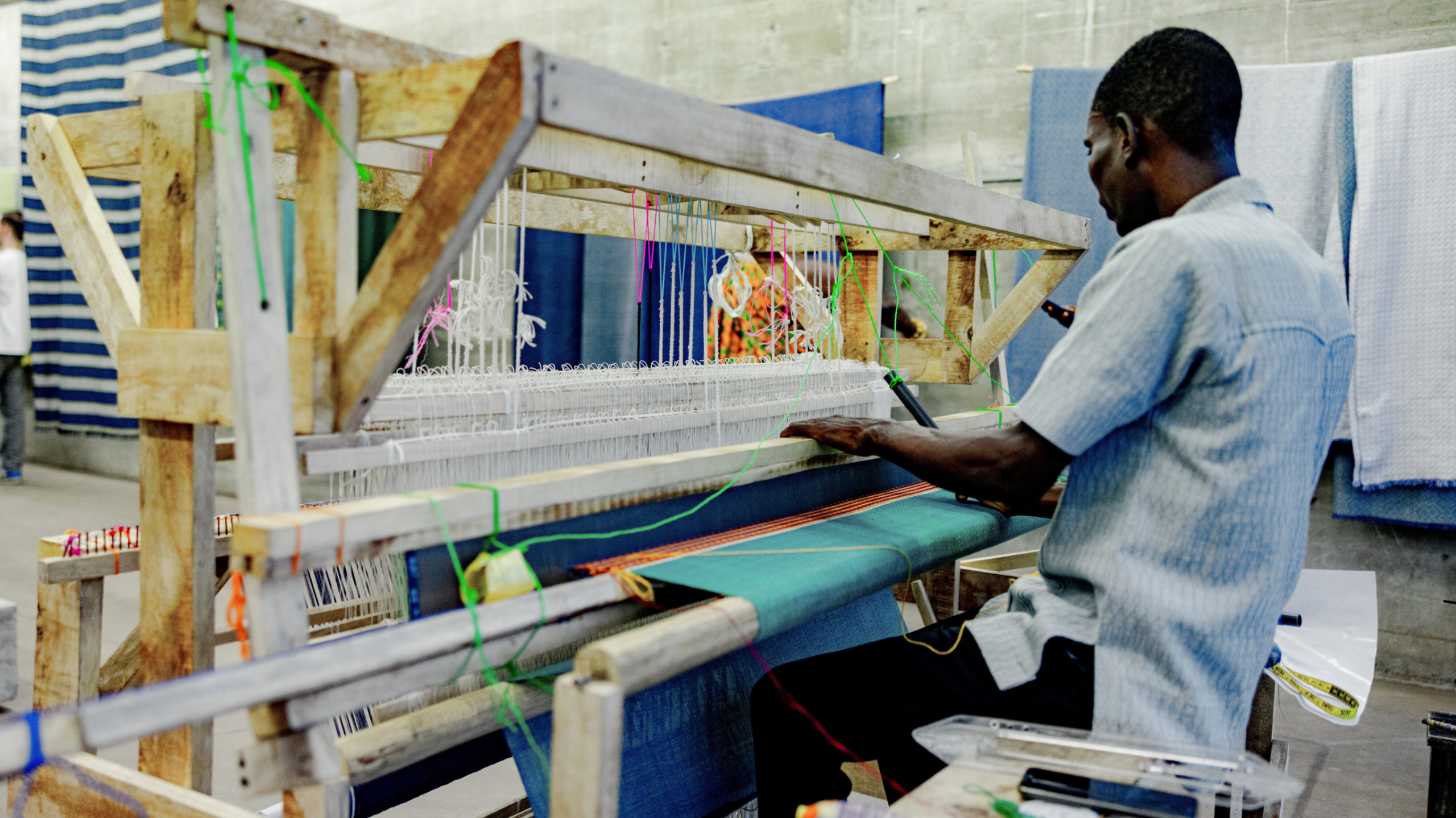
At the same time, our technical work in Ghana continued to develop. The 8-pedal loom originally introduced by a German expert was quickly developed into our 12-pedal system (Weave Pro 12). This means that much more complex patterns are possible today. The result is a combination of modern design possibilities and traditional African weaving techniques. For the weavers, this meant a noticeable self-confidence in the use of innovative tools and designs.
When we asked how we could develop our web project into a long-term training and manufacturing facility, we received exceptional appreciation and support from the Paramount Chief, who is also Chancellor of the University of Education, Winneba. In this context, we were promised 1.5 hectares of land in the immediate vicinity of the university campus. This trust touches us deeply. It is an expression of a shared belief in education, craftsmanship and local value creation. The proximity to the university creates prospects for exchange, cooperation and sustainable growth.