


Train the trainer for the development of hand-woven fabrics
Closing the textile value chain in a holistic way requires more than just growing cotton, training weavers, and mass-producing clothing. The development of handwoven fabrics is also crucial.
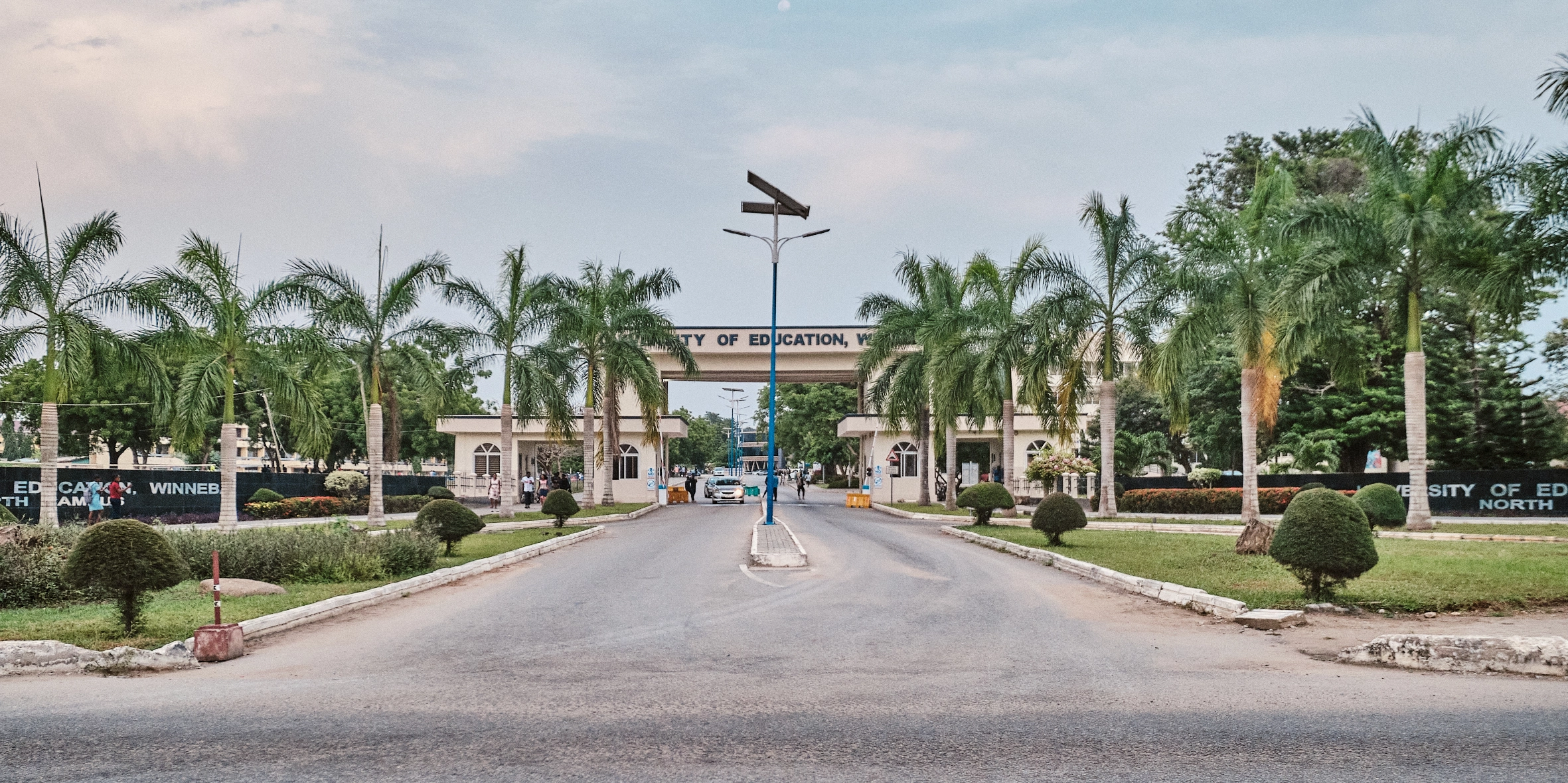
In collaboration with the University of Education, Winneba, we are working on the further development of traditional weaving techniques through applied design and materials research. The goal is to develop our own fabrics that preserve artisanal knowledge, think creatively, and at the same time meet the demands of contemporary use and markets.
This approach combines tradition and innovation, strengthens cultural identity, and contributes to economic self-sufficiency, dignity, and long-term prospects within the local textile sector.
TRAIN THE TRAINER FOR THE DEVELOPMENT OF HAND-WOVEN FABRICS
In addition to the cultivation of cotton, the training of tailors and the serial production of garments, the development of high-quality yarns and fabrics is also important in order to close the textile value chain. With the University of Education in Winneba, we are venturing into precisely this exciting terrain. It is about economic self-sufficiency, but also culture, identification and dignity.

Presidential Republic
Form of government
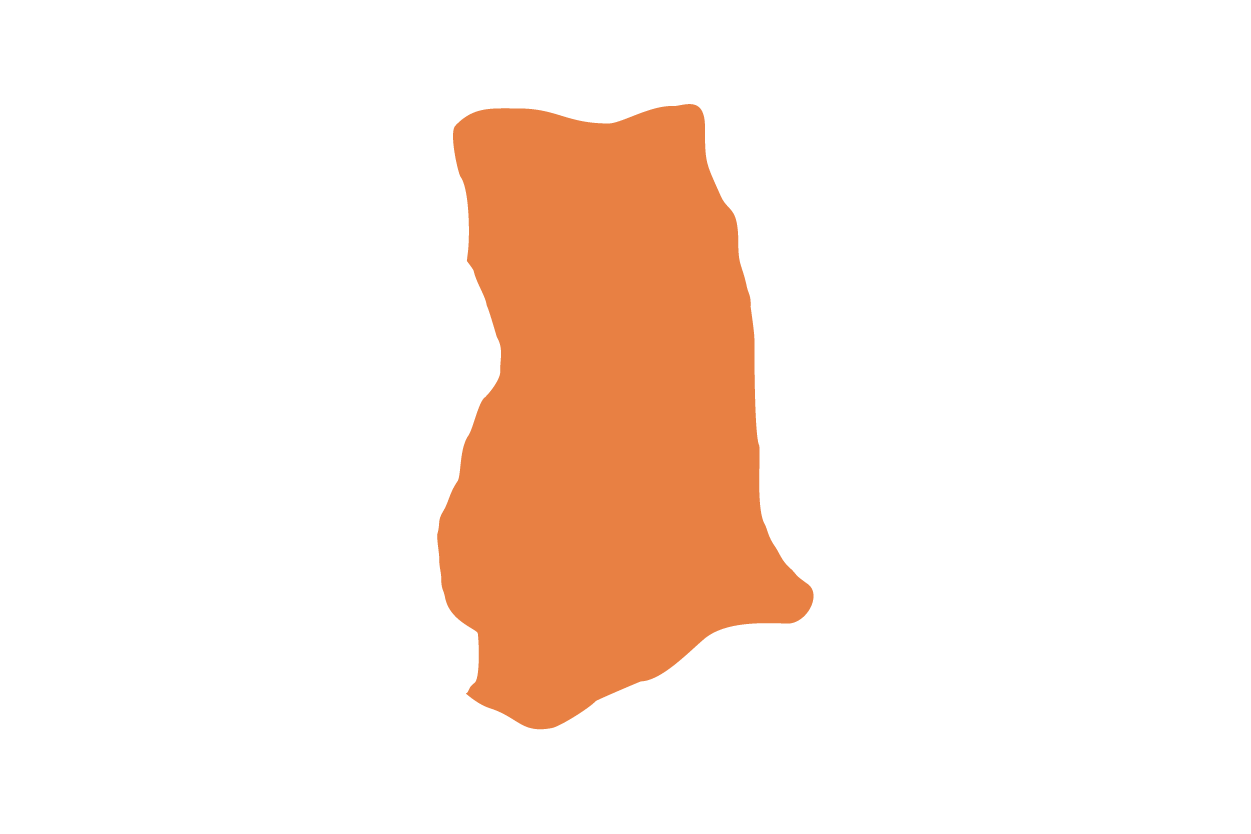
238537 km²
Area

30.79 million
Inhabitants (2021)

religions
71 % Christians, 18 % Muslims,
5 % traditional religions

92,5 %
Youth literacy rate
(2018)

+ 2,0 %
Population growth rate
(2021)
Country profile
GEOGRAPHICAL LOCATION
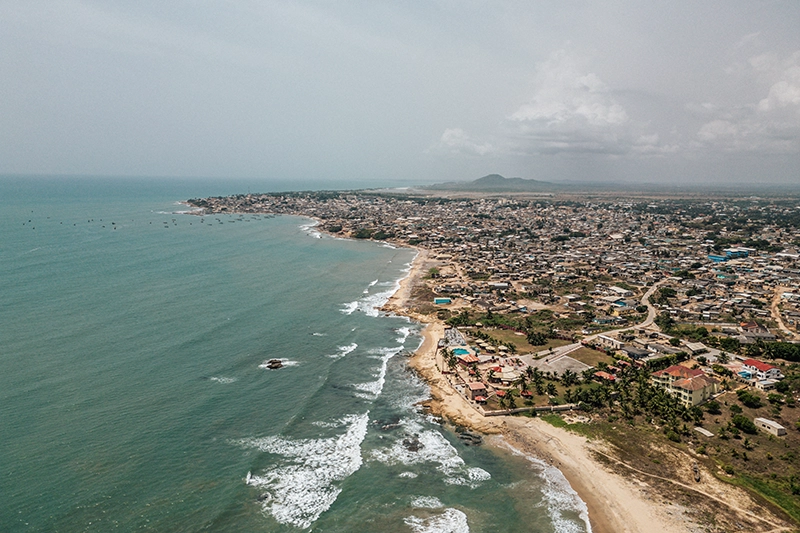
Ghana is located on the Gulf of Guinea and borders the Ivory Coast to the west, Togo to the east and Burkina Faso to the north. The country is roughly the size of Great Britain, with most people living along the coast, in the capital Accra or in the second largest city in the centre of the country: Kumasi.
ECONOMY
Thanks to its political stability, Ghana is an important business location in West Africa; the secretariat of the new African Continental Free Trade Area (AfCFTA) has been located in Accra since 2020. However, poor transport infrastructure, high interest rates and corruption continue to hamper investment.
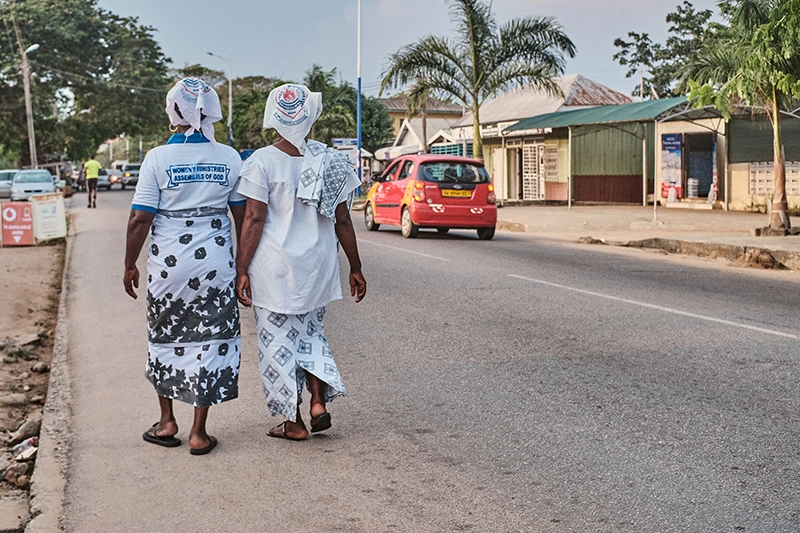
RELIGION AND LANGUAGE
The south of the country is Christian, the north Islamic, and there is hardly any tension between the two religions. Ghana was the first sub-Saharan country to gain independence in 1957. The official language is English, but there are also more than 70 ethnic languages, most notably Akan.
TEXTILES AND THE TEXTILE INDUSTRY
Cheap imports from Asia and second-hand clothing from Europe are also having a massive impact on the local textile and clothing industry in Ghana. The government is trying to combat this and protect the sector. Characteristic of Ghana are the hand-woven Kente fabrics with their geometric patterns and bright colours.
Fabric development in Winneba
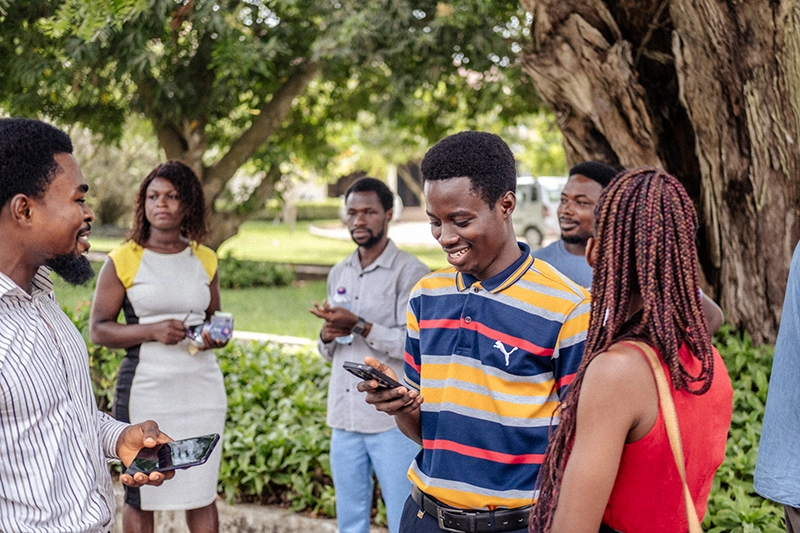
To become less dependent on fabrics from abroad, we need to reflect on our heritage and reorient ourselves: What knowledge do we have? How can traditional techniques and patterns be revived and reinterpreted? Who is interested in handwoven fabrics? What materials are available, and in what quality? In partnership with Invest for Jobs, a brand of the German Society for International Cooperation (GIZ), and the University of Education, Winneba, we are seeking answers to these questions. On the university campus, we are experimenting with weaving techniques, materials, and colors. We are exploring the potential of ecological fibers such as organic cotton, pineapple, and birch wood. We are conducting market analyses and developing strategies to increase the production of handwoven fabrics without compromising quality and while ensuring good working conditions.
In order to become less dependent on fabrics from abroad, there is a need for reflection and reorientation: what knowledge is available, how can traditional techniques and patterns be reactivated and reinterpreted, who is interested in hand-woven fabrics, what materials are available and in what quality? Together with Invest for Jobs, a brand of the Deutsche Gesellschaft für Internationale Zusammenarbeit (GIZ), and the University of Education, Winneba, we are looking for answers to these questions. Experimenting with weaving techniques, materials and colours on the university campus. Researching the potential of ecological fibres such as organic cotton, pineapple and birch wood. We conduct market analyses and develop strategies to increase the production of hand-woven fabrics without compromising quality and while maintaining good working conditions.
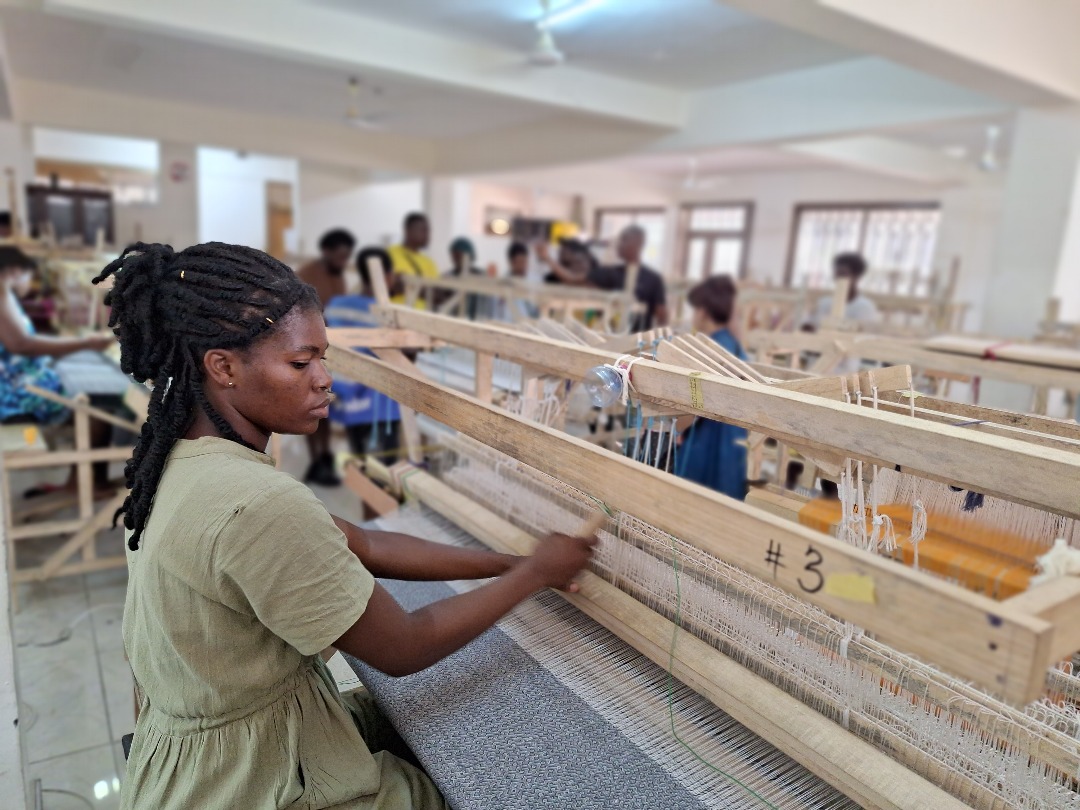
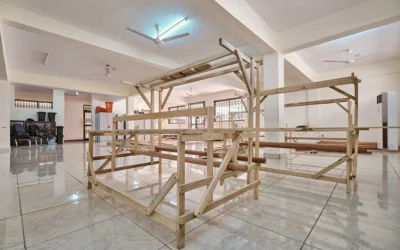
A central component of our approach is the train-the-trainer program, which focuses on weaving. Under the guidance of a German expert, students and trained weavers from the Volta Region are trained in the assembly, operation, and maintenance of wooden looms.
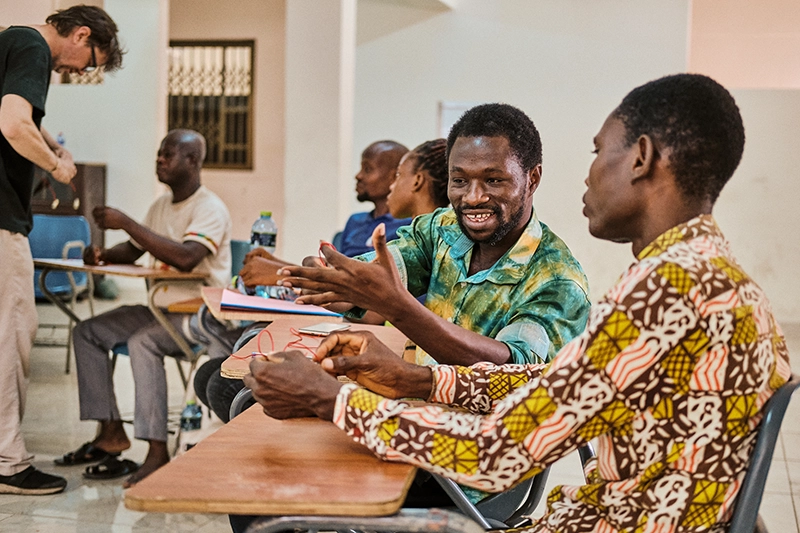
Our goal is for the weavers to establish independent production facilities and create long-term jobs after completing the program. The knowledge gained through the program is specifically shared to train new skilled workers and strengthen capabilities within local communities. In this way, we support the development of small, resilient local structures and ensure that expertise is sustainably embedded in the local community.
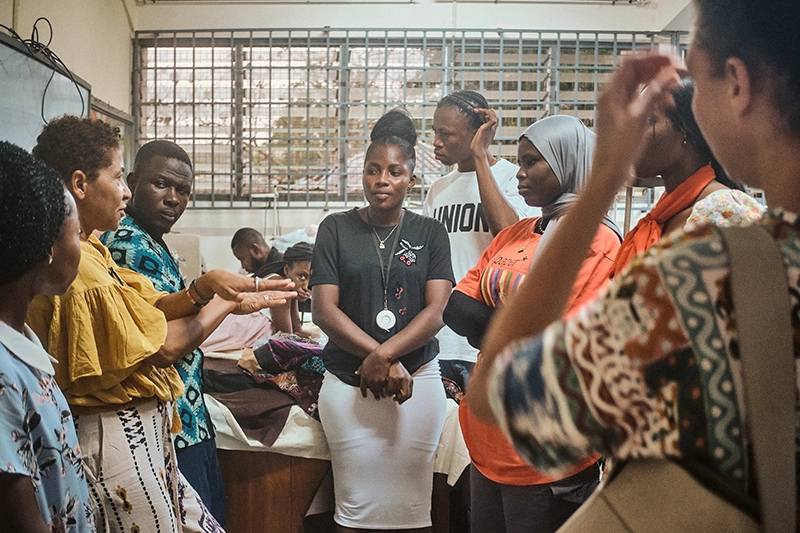
We maintain close communication with African fashion designers and stakeholders in the local textile industry to systematically identify needs, interests, and development potential. In addition to economic and technical aspects, the dialogue also incorporates key issues of identity, cultural roots, renewal, and career prospects within their own countries.
more impressions
News & Stories

Heading Forward with Our Own Strength
We're back at the University of Education in Winneba—and we're thrilled. Over the past six months, the 22-member crew has not only become familiar with the new looms; they've also experimented with various types of yarn and developed fabrics with diverse patterns....

Future in our own country
Lessons in the class of Osuanyi Quaicoo Essel, in which students practise the role of teachers. The University of Education in Winneba (UEW) was recommended to us as a partner for our project in Ghana - since our visit at the beginning of the year, we know even...
Handmade
How do you build a loom from a pile of boards that is not only faster, but can also weave fabrics 1.60 metres wide? For our first training module at the University of Education in Winneba, we invited 15 weavers to learn this skill. At our side: Andreas Möller,...
The Project Justine – Train the Trainer e.V.
The Project Justine – Train the Trainer e.V. empowers young people in Ghana, Benin, and Senegal through vocational training, digital skills, and fair employment opportunities. Our approach is based on training local trainers who pass on their knowledge, thereby building sustainable structures in the textile industry.
In addition to weaving, tailoring, and digital design, we promote literacy, childcare, a small canteen, and safe transportation routes—so that young women and mothers, in particular, can easily access training and work. We set up workshops, develop curricula, equip teams with machines, and support graduates on their path to a self-determined professional life.
A central cultural reference point for our work is the fashion brand NOH NEE. It symbolizes what we mean by contemporary exchange: Colormix as an open, honest, and creative dialogue between cultures. For us, this exchange is not an end in itself, but the starting point for connection, responsibility, and long-term collaboration. Our projects in Benin, Ghana, and Senegal also consciously promote Pan-African exchange—as an equally important foundation for cultural self-identity and economic strength.
We are grateful for the journey we have taken and look forward to the steps that lie ahead. Africa is on the move. We are moving with it.
Milestones
Team & Supporters
Our partners

CONCENTRATION ON SEVEN GOALS (SGDs) OF THE UNITED NATIONS


THE PROJECT JUSTINE
- train the trainer e.V.
Agricolaplatz 7
80687 Munich
THE PROJECT JUSTINE - train the trainer e.V.
IBAN DE71 4306 0967 8237 2376 00
BIC GENODEM1GLS
Please support us:
DONATE NOW AT

© THE PROJECT JUSTINE – train the trainer e.V.